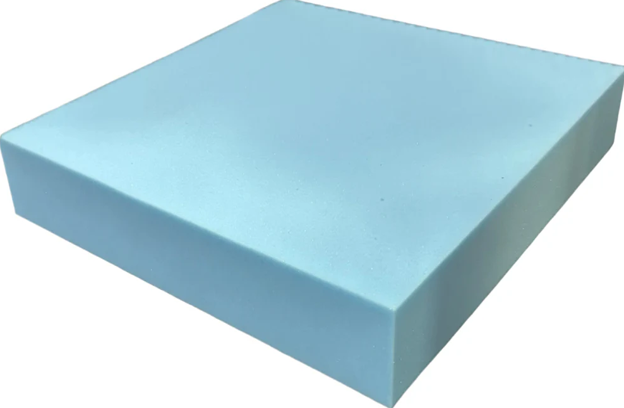
When two identical-labeled cushions are squeezed together in a showroom, they may seem to have come from completely different manufacturers. When high density foam is printed on a tag as if it were a single, fixed item, that’s the portion no one brings up. It doesn’t. Density shows you how much material is contained inside a block, but it indicates very nothing about the foam’s actual composition, texture, or odour. The majority of writing on this stuff ignores the details that really distinguish a good batch from a poor one.
Why Two Firm Cushions Feel Nothing Alike
Despite the fact that squeeze is an unreliable test, everyone uses it. The cover and any softer wrap laid over it have a greater influence on how a hand feels at the surface than what’s below. People are sometimes surprised by the true foam core when the wrap is removed; it might be stiffer or softer than the surface suggests. After handling enough batches, upholsterers completely lose faith in a fast squeeze. Because it is the only place where the foam itself—rather than the dressing around it—gives itself out, they push into a corner where there is no wadding concealing the truth.
The Smell That Tells You It’s Genuine
Fresh foam off a production line carries a faint chemical smell, and with denser grades that smell tends to linger longer before it fades. That’s not a flaw, just leftover residue from the manufacturing process working its way out slowly. High density foam holds onto this scent more stubbornly than lighter grades simply because there’s more material for the residue to sit inside. Furniture makers who know this will often let a fresh batch air out before upholstering anything, rather than sealing the smell inside a cover where it lingers for weeks and gets blamed on something else entirely.
What a Single Layer Can’t Do Alone
In reality, no one sits on pure high-density foam without a softer covering—at least not comfortably. Upholsterers almost often combine a solid core with a softer topper, fibre wadding, or anything more forgiving against the skin since a dense core alone feels more like a park bench than a couch. While the layer above controls how the seat feels to a person sitting down, high density foam performs the structural function of maintaining shape and preventing collapse. The support is there if you skip the second tier, but no one wants to stay on it for very long.
Why Labels Lie More Than You’d Think
There’s no single rulebook every supplier follows, which means the same wording on two batches can describe different products entirely. One factory’s idea of a dense grade might sit closer to another’s mid-range stock, and a buyer relying purely on the label has no way of catching that gap. Weight gives a better clue than wording ever does; lift a sample and a properly dense piece feels noticeably heavier for its size than a lighter grade dressed up with the same description. Professionals who’ve been caught out once tend to test rather than trust the paperwork afterwards.
The Cut That Ruins an Edge
Slice through a dense block with the wrong blade and the edge doesn’t stay clean, it tears, leaving a rough line that no amount of careful upholstery can hide later. Lighter foams forgive a blunt blade far more easily than denser ones do. Workshops that cut this material regularly keep blades sharper and replace them sooner than they would for anything softer, because a ragged edge on a dense block shows up immediately once fabric gets stretched over it. It’s a small detail, rarely mentioned, that quietly separates a tidy cushion from a lumpy one.
Conclusion
Where purchasers really look, on a swing tag or a showroom display, none of this is stated. Weight, blade selection, smell, and layering all convey a more truthful narrative than any one written phrase could. When these aspects are handled well, high density foam gains its reputation; when they are ignored, it silently loses it. Instead than relying on a label to explain things, anybody selecting foam for furniture, packing, or cushioning would be better off doing direct testing.