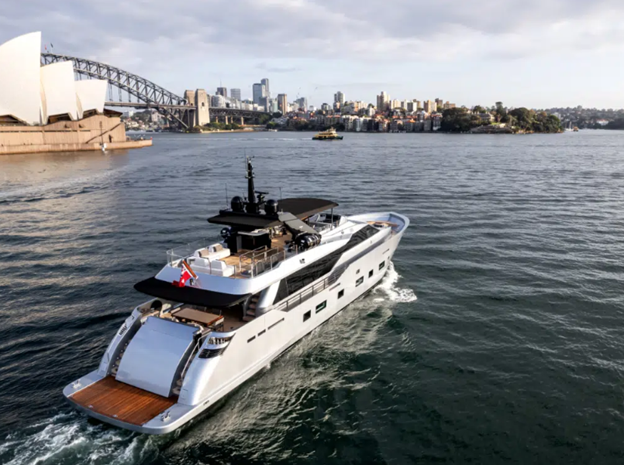
Sydney has a geography problem that most cities would envy. The best of it faces the water and turns its back on the street. Walk along Circular Quay, and you get a glimpse the Opera House to one side, the bridge overhead, ferries crossing in every direction. It feels impressive standing there. But the quay is still land, and land locks you into a single fixed angle on a harbour that earns its reputation from every other direction. Sydney Harbour cruises exist because this city quietly withholds its best views from anyone who stays on the footpath.
The Postcard Lies
Every famous photograph of Sydney Harbour is accurate and misleading at the same time. The bridge and the opera house are genuinely that close, and yes, it really does look like that on a clear morning. What no photograph has ever managed to show is the sheer stretch of waterway sitting behind that familiar frame. Past Bradley’s Head, past the Spit Bridge, past the sandstone coves near Manly that see almost no tourist traffic the harbour just keeps going. Passengers who arrive expecting a short loop around the landmarks and instead get the wider picture tend to leave with a genuinely different sense of what Sydney actually is as a place.
Light Changes Everything
Most people book a harbour cruise around availability and give the departure time almost no thought. That habit costs them more than they realise. The harbour at midday under flat, pale clouds is pleasant but not particularly memorable. That same stretch of water on a late afternoon, with low western sun catching the sandstone cliffs and reflecting back off the bridge towers, looks like somewhere else entirely. Locals who spend regular time on the water will tell you that late afternoon sailings outperform everything else not because the route is different, but because the light is. Sunset sailings on Sydney Harbour cruises are not a marketing addition. They are a visually distinct experience that no midday departure can match, and the difference is stark once seen.
Smaller Boats Stay With You
There is a natural instinct to associate a larger vessel with a better outing more deck space, more comfort, more room to move. On this harbour, that thinking tends to backfire. Large multi-deck boats sit well above the waterline, which keeps the harbour at a slight remove the whole time. A smaller sailing vessel or a timber heritage boat brings the water genuinely close. The smell of the harbour, the movement of the swell beneath the hull, the sound of water running along the bow these things disappear entirely on a large vessel. On a small one, they are what the experience is made of. People who have tried both almost always describe the smaller boat as the outing they remember.
Private Charters Go Somewhere Different
Public sailings cover the main landmarks reliably and suit individual visitors well enough. For groups, though, a public sailing introduces compromises that stack up quickly. The route is set, the schedule is fixed, and the experience happens alongside strangers. A private charter on Sydney Harbour cruises changes the logic entirely. Operators with genuine harbour knowledge will anchor in places the public circuit never reaches sheltered coves, quieter inlets, and spots that long-term Sydney residents have often never seen from the water. Those stops, away from the ferry traffic and the tourist circuit, tend to be where the day actually becomes something people talk about afterwards.
The Ferry Comparison Misses the Point
Travel guides often suggest taking the public ferry as a cheaper alternative to a harbour cruise. It is practical advice that confuses two entirely different things. The Manly Ferry crosses the harbour well, but crossing is what it does moving between fixed points on a published timetable, boarding fast, and clearing the wharf on schedule. A cruise treats the water as the destination rather than the means of getting somewhere. That single difference changes how passengers look at what surrounds them. Without a wharf approaching, the eye settles. The harbour becomes worth watching rather than something to get across.
Conclusion
Sydney harbour cruises give back something that street-level Sydney cannot the city seen from the position it was always designed to be seen from. The departure time, the size of the vessel, and whether the experience is shared or private all shape what a passenger actually carries home. The harbour is varied enough and large enough to surprise even people who grew up besides it. Treating a cruise as a routine tick-box activity is the one reliable way to miss what it genuinely offers.