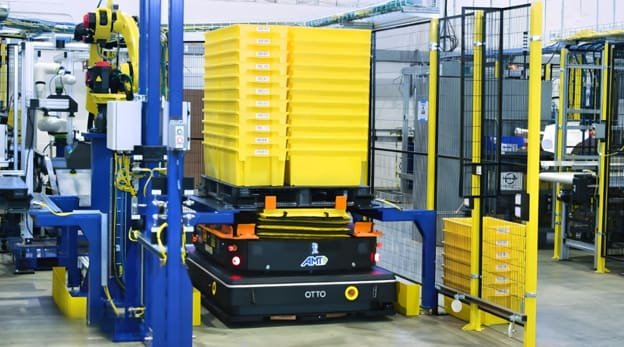
Warehouses often face challenges with labour-intensive processes that require many resources but yield limited productivity. Many facilities rely on traditional material handling methods, overlooking innovative alternatives. Warehouse managers are discovering how autonomous mobile robots (AMRs) can significantly reshape logistics. By automating repetitive tasks, operational scalability increases without needing additional staff. Additionally, workplace safety improves, as robots take on hazardous material handling. Choosing reliable AMR manufacturers is crucial for achieving these transformative benefits.
Streamlining Material Movement
Manual material handling occasionally becomes an operational bottleneck, limiting warehouse throughput and productivity significantly overall. Traditional forklift operations sometimes require skilled operators unavailable during peak demand periods and seasons. Manufacturers occasionally design robots navigating complex warehouse layouts independently and efficiently without human intervention. Autonomous systems sometimes operate continuously without breaks, reducing downtime and increasing overall throughput substantially. Material movement becomes predictable when robotic systems maintain consistent performance throughout extended shifts. Labour allocation shifts towards higher-value tasks requiring human judgement and strategic decision-making capabilities. Warehouse capacity utilisation improves considerably through optimised material flow and intelligent handling operations. Productivity metrics strengthen noticeably through consistent robotic performance and reliable system integration.
Reducing Operational Expenses
Labour expenses occasionally decrease significantly when warehouses reduce workforce requirements through intelligent robotic automation. Equipment maintenance costs sometimes stabilise when robots receive regular preventive servicing schedules consistently. AMR systems occasionally operate without significant additional infrastructure investments or major facility modifications. Energy consumption remains reasonable compared to conventional handling equipment operating continuously throughout operations. Accident reduction decreases workers’ compensation expenses and associated insurance premium costs considerably and measurably. Operational expenses decline measurably through elimination of repetitive labour-intensive tasks and manual handling. Financial performance improves considerably through reduced operational overhead and streamlined warehouse management processes. Bottom-line results strengthen noticeably through improved efficiency and reduced overall operational expenditures.
Enhancing Workplace Safety
Workplace injuries occasionally decrease significantly when robots handle hazardous materials and dangerous warehouse environments. Heavy lifting injuries become less frequent when mechanical systems replace manual labour and handling. Repetitive strain injuries disappear when employees transition toward supervisory and analytical roles exclusively. Safe working environments emerge when dangerous handling tasks are permanently transferred to robotic systems. Employee wellbeing improves considerably when physical demands decrease substantially throughout extended working shifts. Accident prevention strengthens organisational safety records and worker morale considerably and measurably. Insurance premiums sometimes decrease, reflecting improved safety performance and reduced workplace incident rates. Worker protection improves measurably through comprehensive hazard elimination and injury prevention strategies.
Increasing Operational Flexibility
Warehouse configuration changes occasionally become simpler when robots navigate dynamic layouts independently somehow. Seasonal demand fluctuations sometimes require minimal operational adjustments or extensive facility reconfiguration efforts. Facility expansion becomes achievable without proportional labour force increases and associated complications. Scalability advantages emerge when additional robots integrate seamlessly within existing operational systems. Operational adaptability improves considerably through flexible robotic solutions and customisable configuration options. Market demands shift rapidly, yet warehouses maintain responsive capabilities and strategic flexibility. Business agility strengthens considerably through flexible automation implementation and modular robotic systems. Adaptability advantages matter considerably.
Improving Order Fulfilment Speed
Order processing timelines occasionally compress significantly when autonomous systems handle picking and sorting operations. Customer expectations for rapid delivery become achievable through accelerated material handling and processing. Fulfilment accuracy improves considerably when robotic systems reduce picking errors through systematic approaches. Peak period operations sometimes proceed smoothly when robotic capacity supplements human labour effectively. Same-day delivery promises become realistic when warehouse throughput increases substantially and consistently. Service quality improves noticeably through faster order processing and efficient shipment preparation times. Competitive advantages emerge from superior order fulfilment capabilities and industry-leading operational speed. Customer satisfaction strengthens considerably through reliable and rapid delivery processes.
Enabling Real-Time Data Insights
Warehouse management systems occasionally integrate robotic data, providing operational visibility previously unavailable. Inventory tracking becomes accurate when robotic systems continuously monitor stock locations systematically. Performance metrics emerge automatically through integrated monitoring and comprehensive reporting capabilities and systems. Operational bottlenecks become identifiable through data analysis and strategic performance tracking mechanisms. Decision-making improves considerably when managers access comprehensive real-time operational information and insights. Forecasting accuracy strengthens through historical data analysis and predictive pattern recognition systems. Strategic planning becomes more informed through available operational data and performance analytics. Management capabilities improve considerably through data-driven decision-making and strategic insights.
Conclusion
AMR manufacturers transform warehouse operations through innovative robotic automation solutions and advanced technologies. Material handling efficiency improves substantially through autonomous system integration and continuous operation. Operational expenses decline measurably through reduced labour requirements and improved overall efficiency. Workplace safety strengthens considerably through hazard elimination and significant injury reduction initiatives. Operational flexibility increases, enabling responsive warehouse management and rapid scaling capabilities. Order fulfilment speeds accelerate, improving customer satisfaction and competitive market positioning substantially. Data insights enhance decision-making and strategic planning capabilities for warehouse management. Facilities discover competitive transformation exceeding expectations remarkably and measurably.