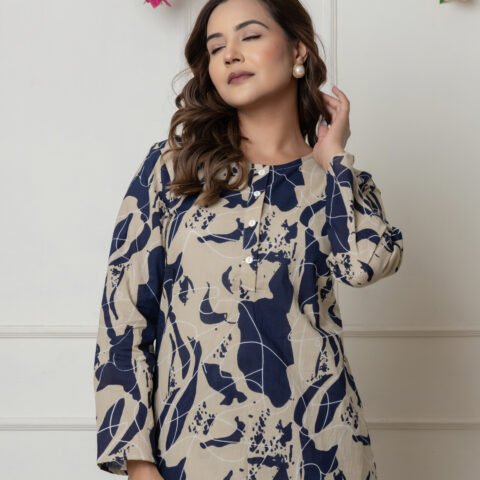
History and workmanship mix in the vibrant city of Jaipur, commonly known as the cultural heart of Rajasthan. The city’s dynamic markets, rich fabrics, and centuries-old artisanal legacy have attracted fashionistas, designers, and business owners equally for a very long time. One of its many textile products, the flexible Indian tunics called kurtis, has special importance for the business. Kurtis is produced mostly in the city, which is also well-known for its quality, innovation, and cultural diversity of its goods.
This article aims to provide a thorough study of how Jaipur came to be identified as a key Kurti Manufacturers in Jaipur, what separates the craftsmanship of Jaipur, and how the industry is expanding in the present fashion-forward time.
The Basis Of This Tradition Is Textile History
Jaipur is said to have a long history in textiles spanning many centuries. Traditionally a part of India’s booming trade path, block printing, dyeing, embroidery, and handloom production helped to establish this city. This resulted in the evolution of a well-organized garment business over the course of time, which in turn led to the construction of the present Kurti by mixing traditional designs with modern forms.
Making kurtis in Jaipur is a legacy passed down from generation to generation, not merely a commercial endeavour. Many of the nearby firms are family-owned businesses with decades of experience running under their name. These designers are well knowledgeable on the many finishing processes, color theory, printing methods, fabric, and theory of design.
A Detailed Guide On The Jaipur Kurti Making Process
Making a Kurti in Jaipur is a difficult procedure involving many stages, each of which is completed by seasoned workers with subject-matter knowledge.
The process begins with the design’s conception, which often finds inspiration in local flora, Mughal patterns, conventional themes, even historical structures. To cater to modern clients, designers with headquarters in Jaipur often mix antique motifs with modern cuts, asymmetric hemlines, and fusion designs.
The selection of the fabric comes next. Apart from soft cotton, georgette, mulmul, and rayon, Jaipur is known for its georgette. Particularly cotton is used heavily as it lets air flow and fits for either block printing or dying. Among the most often used prints for printed Kurtis are ones called Sanganer and Bagru, exclusive to the Jaipur region.
Among the most labor-intensive and culturally important procedures, the stages of dying and printing follow next. Often utilized natural dyes and vegetable colors help to preserve an ecologically friendly approach. A trademark of Jaipur, hand block printing is a method wherein patterns are imprinted on fabric using hand-carved wooden blocks. This approach requires much expertise and precision.
Once the material has been ready, cutting and stitching activities might then start. Expert tailors preserve the look of handmade work by cutting fabric panels in line with design standards and sewing them using industrial equipment. Some of the decorations added here include embroidery, mirror work, piping, and laces; they are frequently hand-made.
Before it is delivered to retail stores or sent internationally, the Kurti also undergo quality checks, ironing, labeling, and packaging. Though it takes a lot of time, the whole operation ensures that every single item has unique aesthetic value.
What Distinguishes Jaipur’s Kurtis?
Regarding Kurtis’ manufacturing, what really sets Jaipur apart from other towns is the balance of innovation and inventiveness. The artisans may adapt to the always changing needs of the market even if they still follow their traditional techniques. Whether they are customizing fits to match global size criteria or experimenting with Indo-Western fusion trends, Jaipur’s designers are able to consistently provide fashion-forward goods without compromising the cultural soul of their products.
The vibrancy of the colors also really pops out. Jaipur Kurtis are well-known for their look because of its earthy tones, strong contrasts, and natural dyes that resist easy fading. Often symmetrical and balanced, the designs mirror the values of Rajasthani culture that are revered.
Furthermore established in Jaipur is the Kurti industry based on moral and ecologically conscious business practices. Many small-scale companies support slow fashion, call for the use of natural materials, and provide fair wages to their workers. Environmental conscious businesses and stores all around have seen this.
A Market Flourishing For Export And Wholesale Alike
Apart from being a hub for design and manufacturing, Jaipur is also a major site for the wholesale Kurtis supply chain. Retailers, online stores, and boutique owners all know that Kurtis in great numbers come from the reputable markets of Bapu Bazaar, Johari Bazaar, and Sanganer. From daily clothes to ostentally decorated objects fit for festive events, these markets provide a range of opportunities.
In response to growing global interest in Indian design, Kurti manufacturers based in Jaipur have also brought their goods to the world scene. A major share of the export market consists of nations such the United States of America, the United Kingdom, Canada, and Australia that have large numbers of Indians residing outside. Designers from other countries sometimes collaborate with Jaipur artisans to create ethnic collections under their own labels, adding even another point of appeal.
perfect for exporting Usually including fabric testing, shrinkage control, and adherence with international standards, the quality control procedure for kurtis is often more strict than that of other clothing. This has made Jaipur’s reputation as a consistent center for Kurtis manufacturer even more valuable.
The Revolutionary Kurti Manufacturer And The Part Technology Plays
Though the company runs on tradition, Jaipur’s Kurti production environment is clearly witnessing more use of technology. Particularly among larger companies, the use of computer-aided design (CAD), digital textile printing, and laser cutting is becoming more and more common.
The way business is done has also been much changed by B2B systems and e-commerce. Local manufacturers may now direct their goods straight to stores all throughout India and even beyond by utilizing sites such as IndiaMART, TradeIndia, and even WhatsApp Business. Response times have dropped dramatically thanks in large part to real-time catalogs, digital payments, and bespoke ordering capability.
Social media has even a role here. Many manufacturers advertise their collections on social media sites like Instagram and Facebook, which draws owners of shops and resellers always looking for new ethnic clothes within their budget range.
Different Challenges Affecting The Sector
Though it is growing, the Kurti manufacturing industry in Jaipur has several challenges. One of the most important issues is with the retention of workers as newer generations are choosing white-collar jobs and away from traditional crafts more and more.
Another aspect adding to the load is maintaining price competitiveness. The spread of mass production and fast fashion is making some smaller artists unable to satisfy the demand for reasonably priced, mass-produced goods. This typically results in compromise of design distinctiveness and quality.
The printing and dyeing sectors can suffer depending on environmental issues and water use. Natural dying does take a lot of water resources even if it is beneficial for the environment. Several manufacturers are hard at work creating water-saving solutions or switching to colors with little impact in an attempt to mix history with sustainability.
Prospects For The Kurti Industry In Jaipur
Given the rising popularity of conscious fashion, there is cause for hope for the future. Jaipur is in a great position to profit from the globally increasing demand for handmade, ecologically friendly, and culturally important clothing. Government initiatives supporting “Make in India” and helping micro, small, and medium-sized businesses (MSMEs) help to further inspire the growth of this industry.
In order to highlight indigenous talent, it is also expected that designers, non-governmental organizations (NGRs), and local craftsmen would cooperate more among each other. Programs encouraging the acquisition of talents and prizes for creativity might help to revive the sector and draw younger people into the trade.
If Jaipur finds the right mix between appreciating innovation and preserving legacy, the Kurti manufacturing sector is ready to grow and thrive in both local and global markets.
Final Notes
Kurti Manufacturers in Jaipur is a dynamic mix of heritage, knowledge, and creativity. This is the real core of the business. Two examples of the methods in which each and every Kurti conveys a story—a narrative that reflects culture, workmanship, and imagination—are hand-carved block prints and finely embroidered motifs. The company has great potential not just as a fashion staple but also as a representative of India’s extraordinary textile skills as it keeps changing in response to modern design trends and technical innovations. Anyone interested in learning the core of Indian modern fashion would find the Kurti manufacturing ecosystem in Jaipur to be a fascinating starting point.